
Presentation of Results – Final Event

During the final event of the SustainACT: Advancing Community Ties project, the main
outcomes and overall impact of the 12-month implementation were presented. The project
successfully achieved its core objective of strengthening environmental awareness and active
community engagement in reducing food waste through awareness campaigns, workshops,
school presentations, and collaboration with local stakeholders.
Throughout the implementation phase, the project recorded increased community
participation in sustainability initiatives, established new partnerships with local stakeholders
and educational institutions, and enhanced public outreach through campaigns, digital
materials, and interactive activities. Sustainable living practices—such as food waste
reduction, composting, and recycling—were actively promoted, contributing to measurable
behavioural changes within the local community.
During the event, the objectives outlined in the original approved proposal were revisited and
confirmed as fully achieved. These included increased community engagement, measurable
reduction of food waste among involved entities, enhanced public awareness, youth skill
development through non-formal learning, and the creation of a sustainable and replicable
model for community-led environmental action. SustainACT concludes with a strong legacy of
cooperation, knowledge-sharing, and empowered local participation for a more sustainable
future.
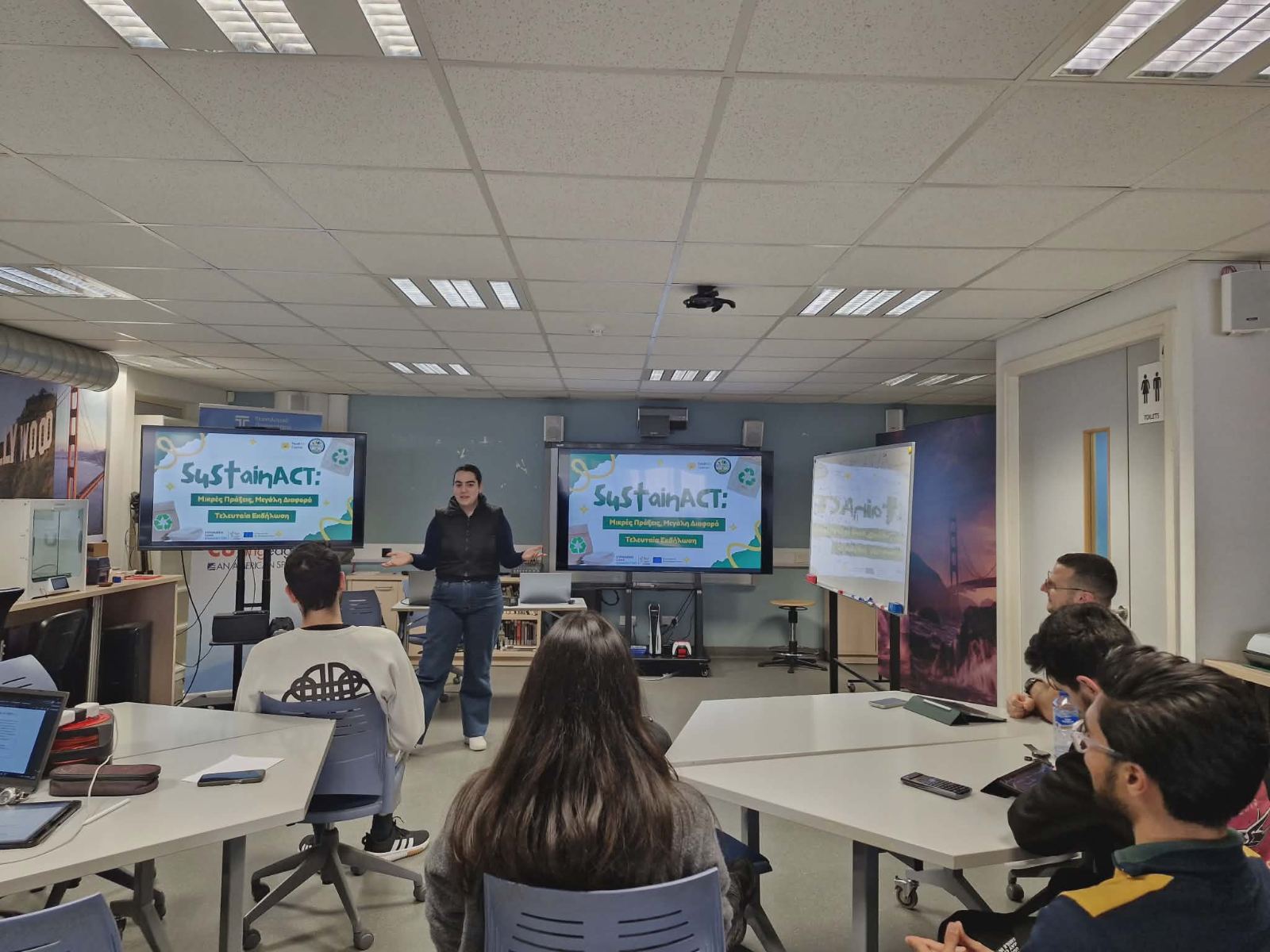
During the final event of the SustainACT: Advancing Community Ties project, the main
outcomes and overall impact of the 12-month implementation were presented. The project
successfully achieved its core objective of strengthening environmental awareness and active
community engagement in reducing food waste through awareness campaigns, workshops,
school presentations, and collaboration with local stakeholders.
Throughout the implementation phase, the project recorded increased community
participation in sustainability initiatives, established new partnerships with local stakeholders
and educational institutions, and enhanced public outreach through campaigns, digital
materials, and interactive activities. Sustainable living practices—such as food waste
reduction, composting, and recycling—were actively promoted, contributing to measurable
behavioural changes within the local community.
During the event, the objectives outlined in the original approved proposal were revisited and
confirmed as fully achieved. These included increased community engagement, measurable
reduction of food waste among involved entities, enhanced public awareness, youth skill
development through non-formal learning, and the creation of a sustainable and replicable
model for community-led environmental action. SustainACT concludes with a strong legacy of
cooperation, knowledge-sharing, and empowered local participation for a more sustainable
future.
During the final event of the SustainACT: Advancing Community Ties project, the main
outcomes and overall impact of the 12-month implementation were presented. The project
successfully achieved its core objective of strengthening environmental awareness and active
community engagement in reducing food waste through awareness campaigns, workshops,
school presentations, and collaboration with local stakeholders.
Throughout the implementation phase, the project recorded increased community
participation in sustainability initiatives, established new partnerships with local stakeholders
and educational institutions, and enhanced public outreach through campaigns, digital
materials, and interactive activities. Sustainable living practices—such as food waste
reduction, composting, and recycling—were actively promoted, contributing to measurable
behavioural changes within the local community.
During the event, the objectives outlined in the original approved proposal were revisited and
confirmed as fully achieved. These included increased community engagement, measurable
reduction of food waste among involved entities, enhanced public awareness, youth skill
development through non-formal learning, and the creation of a sustainable and replicable
model for community-led environmental action. SustainACT concludes with a strong legacy of
cooperation, knowledge-sharing, and empowered local participation for a more sustainable
future.